Navigating Potholes and Monsoons: The Complete Indian Guide to Choosing the Right Tyre Size
You're driving your Maruti Swift through Mumbai's notorious pothole-infested streets when you hit a crater-sized depression that sends a jolt through your steering wheel. Your tyres squeal. Your heart races. Sound familiar? Every Indian car owner knows this feeling. The difference between a nail-biting near-miss and a costly wheel damage often comes down to one critical decision: choosing the right tyre size. Whether you're battling Delhi's scorching 50-degree summers, Bangalore's unexpected monsoon downpours, or Pune's dusty highways, your tyres are literally where the rubber meets the road.
Why This Matters for Indian Roads
Indian roads present unique challenges that make tyre selection far more critical than many owners realize. The combination of pothole-riddled streets in urban areas, unpredictable monsoon flooding in coastal regions, extreme heat variations, and sudden weather changes places tremendous stress on your vehicle's tyres. A wrong tyre size can lead to poor fuel efficiency, compromised safety, uneven wear, and increased susceptibility to punctures—one of the most common roadside emergencies Indian drivers face.
The tyre size directly impacts your car's handling, braking distance, speedometer accuracy, and ride comfort. For example, a Hyundai Creta owner in Mumbai needs different considerations than a Tata Nexon driver in Delhi. Using an incorrect size can void your car's warranty and compromise your vehicle's structural integrity. Additionally, Indian roads demand tyres with superior grip and water displacement properties—qualities that depend heavily on proper sizing.
Top Recommendations
| Brand | Model | Price (INR) | Best For | Rating |
|---|---|---|---|---|
| MRF | ZVTS | 4,200-4,800 | Swift, Baleno, city driving | 4.5/5 |
| Apollo | Amazer | 3,900-4,500 | Nexon, Seltos, budget-conscious buyers | 4.3/5 |
| CEAT | SecuraGrip | 4,500-5,200 | Creta, Compass, all-weather performance | 4.6/5 |
| Bridgestone | Turanza T005A | 5,500-6,500 | Premium sedans, highway driving | 4.7/5 |
| JK Tyre | Ultima Neo | 4,100-4,900 | Scorpio, XUV500, SUV owners | 4.4/5 |
What to Look For
1. Know Your Original Equipment (OE) Size
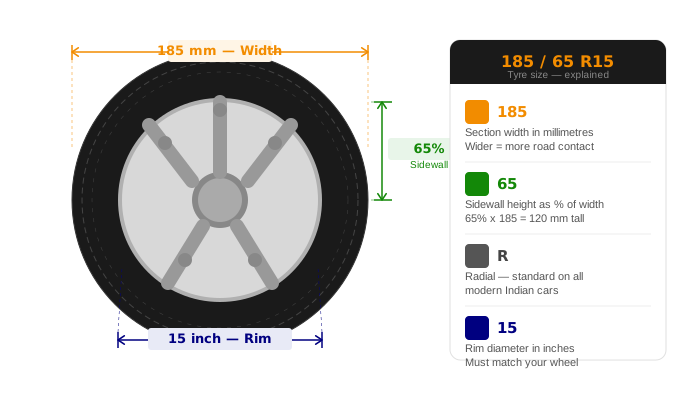
Every car has a recommended tyre size printed on the driver's side door jamb and in your owner's manual. For a Maruti Swift, this might be 185/65R15, while a Hyundai Creta typically needs 215/60R17. Never deviate from this specification unless you've consulted a professional mechanic. The size indicates width (millimeters), sidewall height ratio, and wheel diameter (inches). Using an incorrect size affects your speedometer accuracy and can trigger warning lights in modern vehicles.
2. Choose Based on Indian Road Conditions
Consider your primary driving environment. Urban drivers in pothole-prone cities like Mumbai and Bangalore should prioritize tyres with reinforced sidewalls and enhanced puncture resistance. Highway commuters need tyres with superior grip and heat resistance for Delhi's brutal summer. Monsoon-prone regions require tyres with superior water displacement and groove patterns designed to prevent aquaplaning. Brands like MRF and CEAT specifically engineer their products for Indian climate variations.
3. Balance Budget with Quality
While budget tyres cost ₹3,500-4,000, premium options from Bridgestone or Michelin range from ₹5,500-7,000. For most Indian car owners, mid-range brands like Apollo and CEAT at ₹4,000-5,000 offer excellent value without compromising safety. Remember: tyres are your only contact with the road. Saving ₹500 per tyre today could mean a dangerous blowout tomorrow on a Chennai highway.
Our Verdict
Choose a tyre size exactly matching your manufacturer's recommendation and select from established Indian brands like MRF, Apollo, or CEAT. These brands understand Indian roads, provide excellent after-sales support through widespread service centers, and offer reasonable pricing. If your Tata Nexon requires 215/60R17, don't experiment with 215/55R18, no matter the cost savings. Your safety, fuel efficiency, and vehicle longevity depend on this choice.
FAQ
Q: Can I use a slightly different tyre size than recommended?
A: No, this can affect speedometer accuracy, fuel efficiency, and braking performance. Always stick to the manufacturer's specification.
Q: How often should Indian drivers replace tyres?
A: In Indian conditions, expect replacement every 40,000-60,000 kilometers, depending on road quality and driving habits. Poor roads reduce tyre life significantly.
Q: Which tyre brand is most puncture-resistant for Indian roads?
A: MRF and JK Tyre are specifically designed for Indian road conditions