Navigate India's Roads Like a Pro: Your Complete Tyre Size Selection Guide
Picture this: You're driving your Maruti Swift through Mumbai's notorious pothole-riddled streets during monsoon season, and suddenly you hit a massive crater. Your heart skips—was that due to poor tyre choice? Or perhaps you're battling the scorching 50°C heat in Delhi, wondering if your current tyres can handle the melting asphalt. For Indian car owners, choosing the right tyre size isn't just about comfort; it's about survival on our challenging roads.
Why This Matters for Indian Roads
India presents unique driving challenges that directly impact tyre selection. Delhi's extreme summer heat causes rapid tyre degradation and increased blowout risks. Mumbai's monsoon floods demand tyres with superior water displacement capabilities to prevent hydroplaning. Bangalore's winding ghat roads require enhanced grip and cornering stability. Meanwhile, rural highways connecting cities to villages feature unpaved stretches with sharp gravel and broken surfaces that punish incorrect tyre specifications.
Choosing the wrong tyre size compromises your vehicle's speedometer accuracy, fuel efficiency, suspension performance, and safety. For instance, fitting oversized tyres on a Hyundai Creta can stress the suspension and increase rolling resistance, reducing mileage by 5-8%. Undersized tyres on a Tata Nexon reduce ground clearance dangerously on broken roads. Your car's manufacturer specifies optimal tyre dimensions for good reason—these calculations account for weight distribution, braking performance, and handling characteristics specifically suited to Indian road conditions.
Top Recommendations
| Brand | Model | Size | Price (INR) | Best For | Rating |
|---|---|---|---|---|---|
| MRF Wanderer | Sport | 185/65 R15 | 4,200-4,800 | Maruti Swift, sedan comfort | 4.5/5 |
| Apollo ActiZone | GT | 205/55 R16 | 5,500-6,200 | Hyundai Creta, SUV performance | 4.7/5 |
| CEAT SecuraDrive | Plus | 175/65 R14 | 3,800-4,400 | Budget cars, daily commute | 4.3/5 |
| Bridgestone B-Serice | TL | 195/60 R15 | 6,500-7,200 | Premium sedans, highway driving | 4.8/5 |
| Goodyear Assurance | Duraplus | 185/60 R15 | 5,800-6,500 | Monsoon-heavy regions | 4.6/5 |
What to Look For
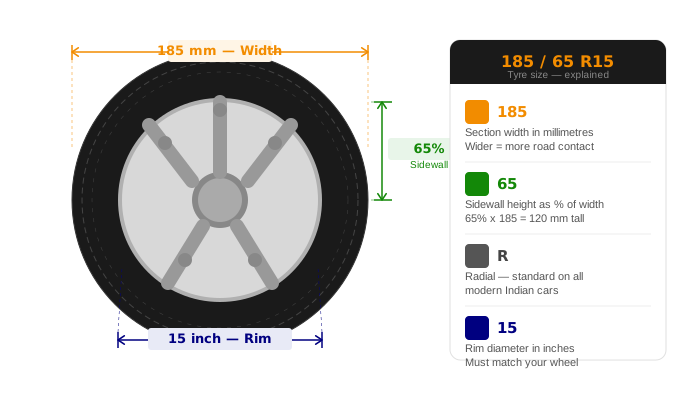
Understand the Three-Part Tyre Code: Every tyre sidewall displays three measurements. The first number (185, 195, 205) represents width in millimeters—wider tyres provide better stability but reduce fuel efficiency. The second number (60, 65) is the aspect ratio or sidewall height as a percentage—higher ratios offer better comfort on potholed roads. The final number (R15, R16) denotes rim diameter in inches. Your car's manual specifies the exact combination; never deviate from manufacturer recommendations.
Choose Based on Regional Climate: If you primarily drive in monsoon-prone areas like Kerala or Assam, select tyres with enhanced tread patterns and water evacuation channels (MRF Wanderer or Goodyear Assurance Duraplus are excellent). For Delhi and Rajasthan's heat, choose tyres with heat-resistant compounds like Apollo ActiZone or Bridgestone B-Series to prevent sidewall degradation. Bangalore's mixed terrain benefits from all-terrain compromises.
Balance Price with Longevity: Budget options like CEAT SecuraDrive at 3,800 INR offer decent mileage (40,000-50,000 km) for city-only usage. Mid-range tyres (5,000-6,000 INR) provide 60,000-80,000 km lifespan and better handling. Premium brands (6,500+ INR) deliver 80,000-100,000+ km with superior safety margins—justified investment if you frequently travel highways between Delhi-Mumbai or Bangalore-Chennai routes.
Our Verdict
For most Indian car owners, mid-range brands like Apollo ActiZone or MRF Wanderer represent the sweet spot—they cost 4,500-6,000 INR, provide reliable performance across monsoons and heat, and last 60,000-80,000 km. Verify your exact tyre size from your car's fuel filler door or manual, then cross-check with your mechanic before purchasing. Don't compromise on tyres; they're literally where your safety meets the road.
FAQ
Q: Should I buy different tyres for summer and monsoon?
A: Not necessary for city driving, but if you travel highways frequently during monsoon (June-September), monsoon-specific tyres like Goodyear Assurance significantly improve safety on wet roads.
Q: Can I fit larger tyres to increase ground clearance?
A: Absolutely not—this voids warranty, affects braking accuracy