Navigate India's Roads Right: Your Complete Guide to Choosing the Perfect Tyre Size
You're driving your Maruti Swift through Mumbai's notorious pothole-filled streets when suddenly—THUD! Your tyre hits a crater-sized depression. As you pull over to assess the damage, you realize your tyres aren't just about rolling forward; they're your car's foundation against India's unpredictable roads. But here's the question most Indian car owners never ask: Are you running the RIGHT tyre size?
Whether you're battling Delhi's scorching 45°C heat, navigating Bangalore's monsoon-soaked highways, or dodging potholes in Pune, your tyre size matters more than you think. Let's decode this essential choice together.
Why This Matters for Indian Roads
Indian roads are uniquely challenging. We face extreme temperature variations—from freezing winters in the hills to melting summers in the plains. During monsoons, waterlogged roads and sudden flooding demand tyres with superior grip and water displacement. Our pothole-infested highways require tyres with reinforced sidewalls to prevent punctures and bulges.
Choosing the wrong tyre size affects your car's handling, fuel efficiency, speedometer accuracy, and brake performance. A Hyundai Creta fitted with oversized tyres might look aggressive, but it'll consume more fuel and strain your suspension. Undersized tyres on a Tata Nexon compromise safety and load-carrying capacity.
Most importantly, your car's manufacturer specifies an ideal tyre size based on extensive testing. Deviating from this recommendation voids warranties and creates safety hazards. In India's demanding driving conditions, the correct tyre size is non-negotiable.
Top Recommendations
| Brand | Model | Price (INR) | Best For | Rating |
|---|---|---|---|---|
| MRF | ZVTS | 4,800-6,200 | Budget-conscious buyers, daily commuters | 4.2/5 |
| Apollo | Amazer 4G | 5,100-6,800 | All-weather performance, monsoon safety | 4.4/5 |
| CEAT | SecuraLife | 5,500-7,200 | Durability, pothole resistance | 4.3/5 |
| Bridgestone | Ecopia EP150 | 7,500-9,800 | Premium comfort, fuel efficiency | 4.6/5 |
| JK Tyre | Ultima Neo | 4,900-6,500 | Value for money, decent mileage | 4.1/5 |
What to Look For
1. Check Your Vehicle's Manual First
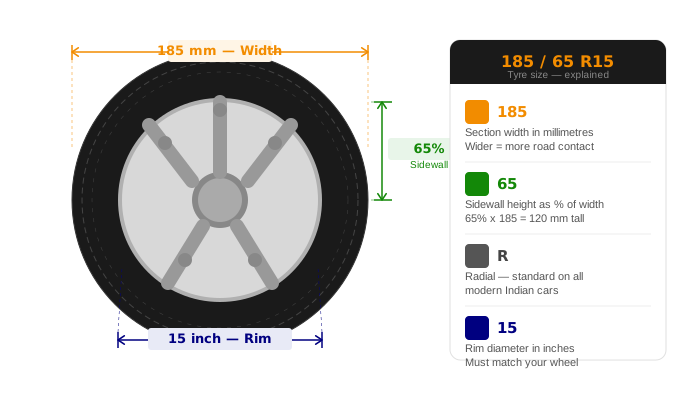
Your car's owner manual contains the manufacturer-recommended tyre size in the format: 185/65R15. The numbers represent width (185mm), aspect ratio (65%), and rim diameter (15 inches). You'll also find this information on the driver's side door jamb. Never rely on guesswork or your friend's advice. This specification is absolute.
2. Consider India's Climate Extremes
In Delhi's brutal summers, tyres deteriorate faster due to heat. Choose brands with advanced rubber compounds like Apollo Amazer 4G or Bridgestone Ecopia EP150 that resist heat cracking. For monsoon-prone regions like Bangalore, Chennai, and coastal areas, prioritize tyres with superior water evacuation and deeper tread patterns. The CEAT SecuraLife range offers excellent monsoon grip, crucial for safety on waterlogged Indian highways.
3. Evaluate Load and Usage Patterns
A Maruti Swift used for daily city commuting in Pune has different demands than a commercial vehicle plying Delhi-Mumbai highways. Calculate your vehicle's load capacity and driving patterns. If you frequently travel on poorly maintained roads, invest in tyres with reinforced sidewalls like MRF ZVTS, which resists punctures and sidewall bulges—common problems in India.
Our Verdict
For most Indian car owners, the sweet spot lies between mid-range brands offering reliability and affordability. Apollo Amazer 4G represents excellent value, especially if you live in monsoon-prone regions. However, if your budget allows, Bridgestone Ecopia EP150 offers superior longevity and fuel efficiency, recovering costs through reduced consumption.
Always purchase from authorized dealers to ensure genuine products. Counterfeit tyres are rampant in India and pose serious safety risks.
FAQ
Q: Can I fit a larger tyre size for a sportier look?
A: No, oversized tyres reduce fuel efficiency, damage your speedometer accuracy, and may void your warranty. Stick to manufacturer specifications for safety and performance.
Q: Are premium branded tyres really worth the extra cost in India?
A: Yes, premium brands like Bridgestone last 15-20% longer in India's extreme heat and handle monsoons better, justifying the investment over 4-5 years.
Q: How often should I rotate my tyres on Indian roads?
A: Rotate every 8,000-10,000 kilometers to ensure even wear, especially important given our pothole-laden highways.
Q: What's the ideal tyre pressure in Indian heat?
A: Follow your manual's recommendation strictly. In summers, check pressure